

The Benefits Account You Might Be Sleeping On: The HSA
By: Jill Franks and Ashley McVicker
| Apple | Spotify | YouTube |
If health insurance has ever made you feel like you need a translator, you are not alone.
Premiums. Deductibles. Coinsurance. Out-of-pocket maximums. “In-network.” “Preventive.” “Diagnostic.” The whole thing can feel like a vocabulary test you did not sign up for, and the stakes feel way too high to be guessing.
We were already feeling that when Farmers State Bank switched our employee health plan to an HSA plan. We kept hearing people say HSAs are “amazing,” “confusing,” “only for young people,” “a scam,” “a savings account,” “an investment account,” and about ten other things that cannot all be true at the same time.
So we did what we always do when something feels muddy. We brought in someone who lives in this world every day.
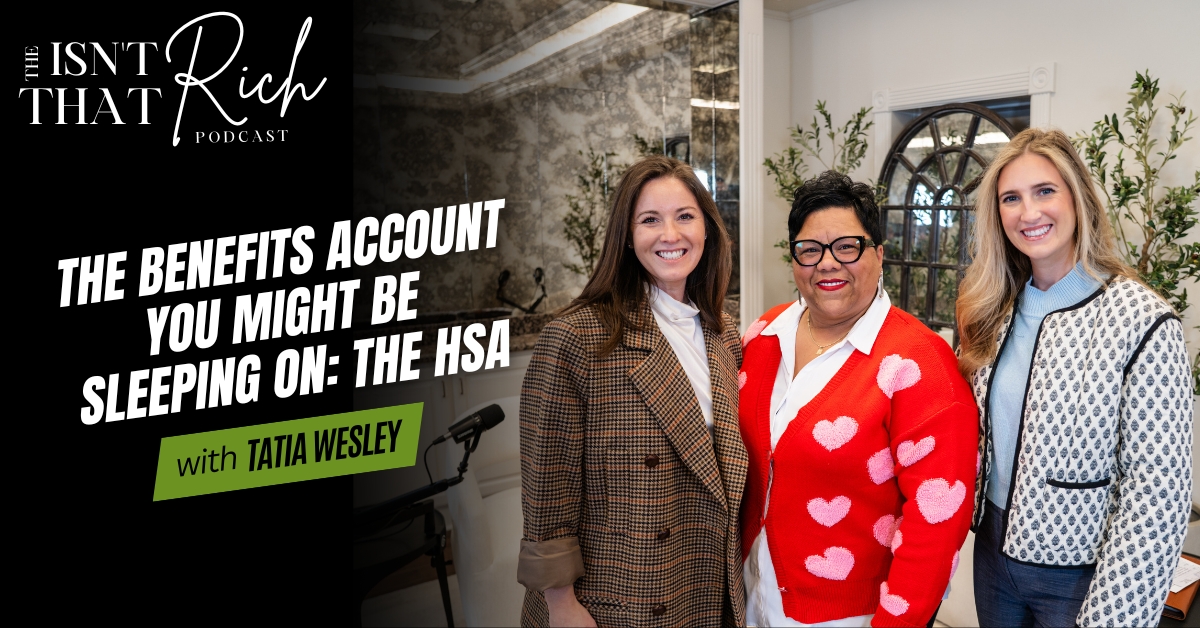
Tatia Wesley from FSB Insurance joined us for this interview episode, and she did not just give definitions. She gave real-life explanations, the “here’s what to pay attention to” parts, and the practical tips people usually learn the hard way. If you are new to HSAs or you have had one for years but still do not feel confident, this is going to help.
Meet Tatia: 17 Years in the Insurance World and Big on Education
Before we jumped into HSAs, we asked Tatia how she ended up in the benefits world, because you can tell quickly when someone understands this stuff from real experience.
Tatia has been in the insurance industry for about 17 years. She started as an account manager and was eventually thrown into health insurance and employee benefits. She described herself as self-taught, learning directly from her General Agent, and she said it with pride. She learned it from the bottom up, and she loves health insurance benefits.
Which, honestly, takes a special kind of person because healthcare is one of the most emotionally charged things we pay for. It is expensive. It is confusing. And it affects everything.
Tatia’s whole approach comes back to one thing: education. When employees understand how to use their benefits, it helps them, but it also helps employers. It can reduce wasted spending and lead to better premium outcomes over time. That is why she is so passionate about teaching people what they actually have.
And that is exactly what we needed.
So What Is an HSA, Really?
An HSA is a Health Savings Account, but Tatia made it clear right away that this is not just some random savings account you open because you feel like it.
To have an HSA, you must be enrolled in a High Deductible Health Plan (HDHP). That is the key.
For 2026, Tatia explained the deductible has to meet regulations and be $1,700 or higher. And yes, “high deductible” is a wide range. It could be $1,700. It could be $10,000. There is a big spectrum.
Then she explained the part that makes high deductible plans feel so different from the plans a lot of us are used to.
With high deductible plans, you do not typically have “first-dollar benefits.”
That means you usually do not have copays for office visits, prescriptions, specialists, and all the things people associate with traditional plans. Instead, you are paying out of pocket until you hit your deductible.
Ashley used a simple example that made it click. If you go to the doctor for a cold and that visit costs $200, a traditional plan might have you pay a $30 copay and insurance covers the rest. On a high deductible plan, you may pay the full $200 out of pocket until you meet the deductible.
This is the moment where most people think, “Okay, why would anyone want this?”
And that is when Tatia said something that completely shifts how you think about shopping for insurance.
The Part Most People Get Wrong: Stop Shopping for the Deductible
Tatia said most people only look at the deductible when they shop plans. They ignore coinsurance and they ignore the out-of-pocket maximum.
But if you want to understand what a plan can really cost you, the out-of-pocket maximum matters more than the deductible.
Here’s why.
Your deductible is the amount you pay before your plan starts paying.
Your coinsurance is what happens after you hit the deductible. It is the split between you and the insurance carrier. It is not a second insurance policy, even though the word sounds like it should be. It is just the percentage split.
So if your coinsurance is 80/20, that means after you meet the deductible, the plan pays 80% and you pay 20%. Some plans are 70/30, some are structured differently. That continues until you hit your out-of-pocket maximum.
The out-of-pocket maximum is the total max you will pay for covered in-network services in a plan year.
Tatia gave a clean example: you could have a $2,500 deductible, but a $6,500 out-of-pocket maximum. That means you pay $2,500 to meet the deductible, and then you could keep paying 20% coinsurance until you reach $6,500 total.
The important takeaway is that the deductible is not necessarily the whole story.
Tatia also said that when she is selecting plans for employer groups, she likes to find ones where once the deductible is met, coverage goes to 100% because she does not want employees still paying coinsurance after they have already taken the hit.
That was a lightbulb moment for us, because it explains why two “similar” plans can feel completely different financially.
HSAs Are Not Just for Young, Healthy People
Another big misconception we talked through is the idea that HSAs are only good if you never go to the doctor.
Tatia said she hears that all the time, and it is simply not true.
If someone has a catastrophic medical year, knowing their plan structure can actually create more predictability. Tatia used the example of someone dealing with major illnesses and high prescription costs. Those costs can get into the tens of thousands quickly. Ashley shared that her husband had a medication that cost $25,000 a month.
So if your HSA plan has a $5,000 deductible and then 100% coverage after that for in-network care, you know the max you pay that year is $5,000. You might hit it early in the year, and then the rest of the year your covered in-network care is paid at 100%.
That predictability can be life-changing in a hard year.
In-Network Does Not Mean “Only in Your Town”
One thing Jill learned while switching plans was that “in-network” does not necessarily mean the provider has to be local.
Tatia explained that in-network simply means the provider is contracted with the carrier (Blue Cross, Aetna, UnitedHealthcare, and so on). If they are in-network with your plan, you can go to them.
Jill even found a provider from Minnesota who was still in-network, which surprised her. It is a small detail, but it matters when you are trying to find a doctor you trust.
What You Can Pay for With HSA Money (Yes, It’s More Than You Think)
Now, here is where people start to get excited.
An HSA typically comes with a debit card, often called a “Benny card.” Tatia described it as a medical debit card you can use for medical, dental, vision, and HSA-approved over-the-counter items.
That includes things like band-aids, cough syrup, ibuprofen, Tylenol, crutches, braces, certain acne products, and more.
Her tip was simple: when you are shopping at places like Walgreens, CVS, or Walmart, look for the label that says HSA approved. If it is approved, you can swipe the card. You can also use it online for eligible purchases, including things like glasses and vision-related items.
Even Invisalign can qualify, which was news to a lot of people.
But then we hit an important point that most people misunderstand.
Just Because You Buy It With an HSA Does Not Mean It Counts Toward Your Deductible
Jill asked a question that a lot of people assume is true: if you spend HSA money on things like band-aids, cough syrup, dental expenses, or vision purchases, does that count toward your health insurance deductible?
Tatia said no.
Your deductible is tied to medical claims processed through your health insurance. That means doctor visits and medical services, and typically prescriptions that run through the plan, are what count toward the deductible.
Using HSA money for dental, vision, or over-the-counter purchases does not automatically move your deductible. It is still useful, but it is not the same thing.
And if you want something to fall toward the deductible, it generally needs to be prescribed and processed in the right way.
Funding Your HSA: Payroll Deduction, Personal Contributions, and Employer Contributions
So how does money actually get into the HSA?
Tatia explained you can fund it in three ways.
The most common is payroll deduction. Your employer pulls the amount you elect from your paycheck and deposits it into the HSA. The big win here is that it is pre-tax, which means you get the full dollar before taxes are taken out.
You can also fund it from your own bank account. You may receive a tax break at the end of the year depending on how you contribute and your tax situation.
And some employers contribute to employee HSAs as well. They do not have to, but they can.
This is why HSAs are often called “triple tax advantage” accounts. Your contributions can be pre-tax, your growth can be tax-free if invested, and withdrawals for qualified medical expenses are tax-free.
Saving vs. Investing: The Step People Forget
This part matters because so many people assume their HSA is automatically investing.
It usually is not.
Tatia explained that your contributions sit in the account until you move them into investments. Many administrators require a minimum balance (often around $1,000) before you can invest.
Once you hit that threshold, you can choose investment options, and depending on your portal settings, you may be able to set it so anything above that threshold transfers automatically. Jill mentioned that her portal offered that option, which is helpful because it prevents the classic situation where you think you have been investing all year, but you never actually clicked the last button.
Tatia encouraged people to contribute something, even if it is small. Most of us spend $10 or $20 on things we do not even remember. Putting that toward your health future is a smarter trade.
2026 Contribution Limits (So You Don’t Accidentally Overfund)
For 2026, Tatia shared the limits:
If you have individual coverage, the max is $4,400.
If you have family coverage, the max is $8,750.
If you are over 55, you can contribute an additional $1,000 as a catch-up contribution. If both spouses are over 55, each can do the catch-up, but the spouse may need their own HSA account for their additional amount.
Ashley asked a really practical question here. What if you contribute the max early, spend it, and then have a big medical bill later in the year? Can you just contribute more?
No. Once you hit the annual maximum, you cannot contribute more for that plan year. At that point, additional costs would need to be paid out of pocket.
That is why Tatia cautioned people not to treat their HSA like a fun shopping card, especially if they are on a high deductible plan and need to be prepared for medical costs.
Preventive Visits: How a “Wellness Check” Can Turn Into a Deductible Expense
This was one of the most practical parts of the episode.
Tatia explained that preventive wellness visits are often covered at 100%, but the way the visit is coded matters.
Preventive care is for things you have not been diagnosed with. If you have been diagnosed with a condition and the visit is related to managing that, it can be billed differently and may fall to your deductible.
Her advice was to be intentional when scheduling. Tell the office you are coming in for a preventive or annual wellness visit so it is billed properly.
And then she gave the real-world warning: if you walk in listing symptoms and complaints, it may be coded as diagnostic instead of preventive, which can shift it into deductible territory.
Healthcare is not always simple, but knowing how billing works can save you money.
The End-of-Year Question: Do You Lose the Money?
No, and this is the part people love.
With an HSA, your money rolls over year after year. It stays yours.
If you leave your employer, the money is still yours. You can continue using it. The only thing that changes is whether you can contribute. If you are not enrolled in a high deductible plan, you cannot contribute new money, but you can still spend what is already in the account.
If you move to a new employer with a high deductible plan, you can transfer the funds and continue contributing under the new plan.
That is very different from an FSA, which is where the “use it or lose it” fear usually comes from. Tatia said that confusion is one of the biggest misconceptions she sees.
Receipts, Reimbursements, and the 20% Penalty People Don’t Know About
Then we got into the receipts, and this is where Tatia got very clear: keep them.
She keeps a manila envelope of healthcare receipts and stores it safely, because audits can happen and you may need to prove your HSA withdrawals were for qualified expenses.
If you use HSA money on non-qualified items, you can be taxed and hit with a 20% penalty.
That is why Tatia recommends purchasing HSA items separately at checkout. If you accidentally throw a Gatorade in the same transaction and swipe the HSA card, it can muddy the record if you are ever audited.
And here is the strategy that made Ashley’s brain light up:
If you can afford to pay out of pocket now, you can keep your receipts and reimburse yourself later, even years later, as long as the expenses were incurred while you were enrolled in a high deductible plan.
That means some people let their HSA money grow tax-free for years and then reimburse themselves later when they want the cash flow, especially in retirement.
It is not the right strategy for everyone, but it is an option that most people do not even know exists.
Retirement: What Happens at 65?
Tatia explained that by age 65, most people will be using their HSA funds for healthcare costs like Medicare premiums and prescriptions.
There is no deadline where you must use the account up.
And here is the fun surprise:
Once you are 65 or older, you can use HSA funds for non-medical purchases. You will pay taxes on it, but you will not pay the 20% penalty.
So yes, technically you could buy shoes with it at 65. You just do not get the tax-free medical treatment if it is not for a qualified expense.
The Final Message: Don’t Be Afraid of HSAs, Just Learn Them
Tatia’s final advice was simple and strong: do not be afraid to dig into it. Educate yourself.
Because the truth is, premiums are influenced by how a plan is used. If employees use the ER constantly for things that could have been handled differently, the plan’s utilization goes up, claim costs go up, and premium increases follow.
Education helps employees make better choices. It helps employers manage long-term costs. And it helps everyone feel more confident in a system that already feels complicated enough.
So if you are new to an HSA, start by learning your plan, understanding your deductible and out-of-pocket maximum, and setting up your contribution in a way that makes sense for your budget. If investing is an option, make sure you actually move the money and tell the account what to do. And if you are using that Benny card, keep your receipts like your future self is going to thank you for it.
Because they will.