

The Road to 65: Making Sense of Medicare
By: Ashley McVicker
| Apple | Spotify | YouTube |
If you're getting close to 65, you've probably noticed your mailbox filling up. Medicare letters, booklets, postcards and plan offers start showing up months ahead of your birthday, and it can feel like a lot to sort through.
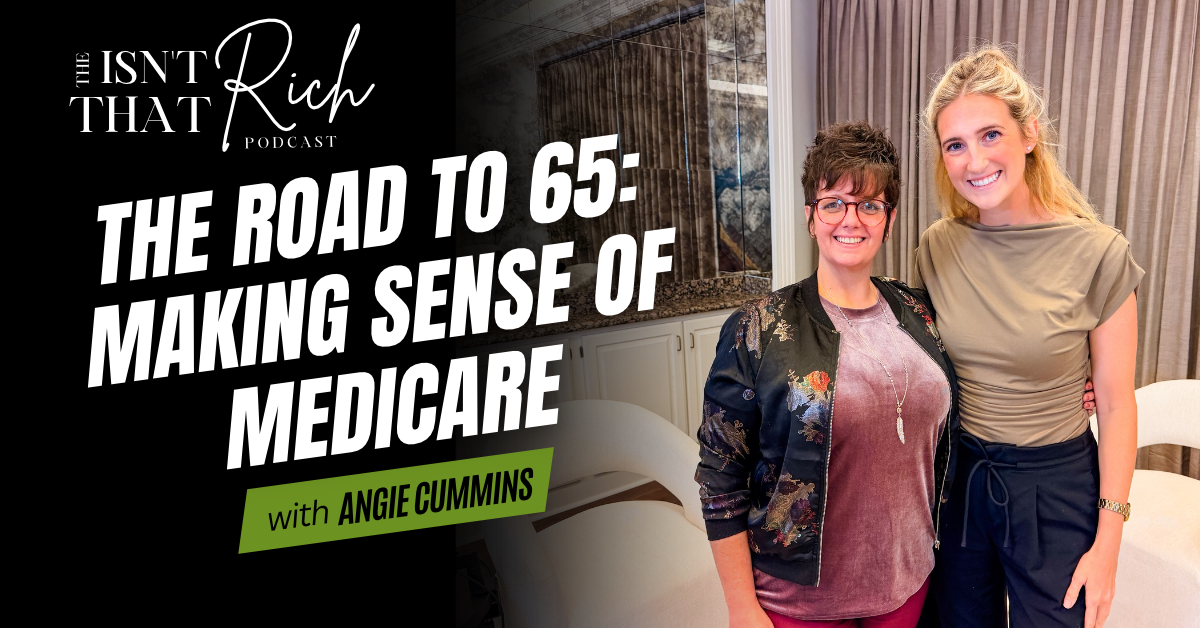
On this week's episode of Isn't That Rich, Ashley sat down with Angie Cummins, health benefits account manager at FSB Insurance, to break it all down. Angie has a name for it: "the alphabet soup of healthcare." Once you see how the letters fit together, though, it gets a whole lot less intimidating. Here's what we learned.
What is Medicare?
Medicare is the federal health insurance program for people 65 and older. Some younger people qualify early, including those with end-stage renal disease or ALS. People who have received Social Security disability benefits for 24 months become eligible too.
Angie made a great point right out of the gate. Medicare isn't just a backup plan. For most retirees it becomes their main coverage, but how it works for you depends on whether you're still working, how big your employer is and what benefits you already have.
Breaking down the letters
Part A (hospital insurance). This covers inpatient hospital stays, hospice and short-term skilled nursing or rehab after a qualifying hospital stay. One important note: Part A does not pay for long-term custodial care, like an extended nursing home stay where you mainly need help with daily activities. That's a separate planning conversation. Most people pay no premium for Part A as long as they or their spouse worked about 10 years paying Medicare taxes.
Part B (medical insurance). Angie calls this the "doctor insurance." It covers office visits, outpatient procedures and preventive care. Part B does have a monthly premium. In 2026 the standard premium is $202.90 a month with a $283 annual deductible. The Medicare Trustees project those will rise to about $209.50 and $292 for 2027, with official numbers usually announced by CMS in November. Many people have the premium taken right out of their Social Security check.
Part C (Medicare Advantage). These are plans from private insurance companies that bundle your Part A and Part B coverage, usually with drug coverage built in. Many include perks like dental or vision, and some carry a lower premium. The catch is the network. Advantage plans often limit which doctors and hospitals you can use, and in a rural area like ours that can mean traveling for care. Some folks love their Advantage plan and others don't, so do your homework.
Part D (prescription drugs). Angie's easy way to remember it: D is for drugs. Part D plans are sold by private insurers and help cover your prescriptions. There's good news here too. Out-of-pocket drug costs are capped at $2,100 in 2026 and $2,400 in 2027. FSB Insurance doesn't sell Part D plans, so Angie points people to local pharmacists like the team at The Medicine Shop. Bring them a full list of your medications and dosages, and they can help you compare plans.
Medigap (Medicare Supplement plans). This is where the alphabet gets extra confusing, because supplement plans also use letters, like Plan G and Plan F. These are plans, not parts of Medicare. They're sold by private insurance companies and help pay the costs Original Medicare leaves behind, like coinsurance and deductibles. Plan G is the one Angie sees the most demand for. It covers nearly everything Parts A and B don't, except the yearly Part B deductible. Medigap plans don't include drug coverage, so most people pair one with a Part D plan.
Original Medicare vs. Medicare Advantage
Ashley asked whether Medicare is like an umbrella with all these pieces underneath. Angie said it's really more of a teamwork situation. You generally choose one of two paths.
With Original Medicare, your Part A works with your Part B, which works with a supplement like Plan G, which works with your Part D. Each piece is separate, but they're partners.
With Medicare Advantage, one private plan rolls everything into a package. Before an agent can walk you through Advantage options, Medicare rules require a signed scope of appointment form, which spells out what you'll be discussing.
You're not stuck forever with either choice. You can change Advantage or Part D plans each fall during Medicare Open Enrollment, which runs October 15 through December 7. Advantage members also get a chance to switch from January 1 through March 31. Keep in mind that if you leave an Advantage plan for Original Medicare later on, you may have to answer health questions to get a supplement.
In our area, Angie sees most people choose Original Medicare with a supplement, largely because of the flexibility to see any doctor who takes Medicare.
Timing is everything
If Angie could leave you with one piece of advice, it's this: don't delay. Start asking questions about six months before you turn 65.
There are two windows you need to know about.
Your Initial Enrollment Period is when you can sign up for Parts A and B. It lasts seven months, starting three months before the month you turn 65 and ending three months after.
Your Medigap Open Enrollment Period is your one-time golden window for a supplement. It lasts six months and starts the first month you're both 65 and enrolled in Part B. During this window, insurance companies have to sell you any supplement they offer at their standard rate, even if you have health problems. After it closes, you may have to answer health questions, and you could be charged more or turned down. It doesn't come back around every year.
Missing deadlines can cost you for life. If you go without Part B or without drug coverage and don't have other qualifying coverage (often called creditable coverage), you can face late enrollment penalties that stick with you as long as you have Medicare. The Part B penalty adds 10% to your premium for each full 12-month period you could have had it but didn't. If you miss your Part B window, you'll generally have to wait for the General Enrollment Period from January 1 to March 31.
Do you have to sign up?
If you're already collecting Social Security when you turn 65, you'll be enrolled in Parts A and B automatically. You can turn down Part B if you have other qualifying coverage.
Part A is a different story. If you're receiving Social Security retirement benefits, you can't opt out of Part A without giving up those benefits and paying back what you've already received. That surprises a lot of people, so talk with the Social Security Administration before you make any moves.
Still working past 65?
More people are working longer, and you can often stay on your employer's health plan. Whether you should is a case-by-case decision.
The size of your employer matters. If your company has 20 or more employees, your group plan usually pays first and Medicare pays second. With fewer than 20 employees, Medicare usually pays first, which means you'll likely want Parts A and B in place. Check with HR about how your plan works with Medicare and whether it counts as creditable coverage. When you do leave your job or your group coverage, you'll get a Special Enrollment Period to sign up for Part B without a penalty.
The HSA rules you need to know
More employers, including ours here at FSB, offer high-deductible health plans paired with a Health Savings Account. HSAs are a fantastic tool, but Medicare changes the rules.
You can't contribute once you're on Medicare. The moment you enroll in any part of Medicare, even just premium-free Part A, you (and your employer) have to stop putting money into your HSA.
Watch out for the six-month lookback. If you sign up for Medicare or Social Security after 65, your Part A coverage can be backdated up to six months (but never before the month you turned 65). Contributions made during that time count as excess and can be taxed. The safe move is to stop HSA contributions about six months before you apply.
You can still spend what you've saved. Your HSA balance is yours to keep. You can use it tax-free for qualified medical expenses, including your Part B, Part D and Medicare Advantage premiums.
One big exception: HSA money can't be used tax-free for Medicare Supplement (Medigap) premiums. Those are specifically excluded by the IRS. If you pull HSA dollars to pay a supplement premium, you'll owe income tax on it.
What about a spouse who didn't work outside the home?
Good news for the many moms (and dads) who stayed home to raise a family. If your spouse worked at least 10 years paying Medicare taxes, you can qualify for premium-free Part A based on their work record.
If you turn 65 while you're still covered on your spouse's employer plan, you can usually stay on it. You'll want to ask the same questions about who pays first and whether the coverage is creditable. Remember, too, that Medicare covers individuals, not families. Each of you will have your own plans.
How supplement pricing works
Ashley asked whether everyone pays the same premium. With insurance, Angie says, the answer is always "it depends." Supplement premiums are based on factors like your age and whether you use tobacco. If you buy during your Medigap Open Enrollment Period, your health can't be held against you. Outside that window, you'll usually answer health questions, and plans that use underwriting tend to be cheaper. Some companies offer guaranteed-issue options with a higher premium.
The benefits within each lettered plan are standardized, so a Plan G from one company covers the same things as a Plan G from another. What's different is the price and how the company handles claims. Angie's tip: before you choose, ask your doctor's office how well they work with that insurance company. At FSB Insurance, Angie regularly quotes plans from Pekin Life Insurance and Blue Cross Blue Shield of Illinois so you can compare side by side.
Plan F vs. Plan G
If you became eligible for Medicare before January 1, 2020, you may still have (or be able to buy) Plan F. It's closed to anyone newer to Medicare. The only difference between F and G is that Plan G doesn't cover the yearly Part B deductible.
Angie is seeing a lot of Plan F members switch to Plan G lately. Plan F premiums have climbed enough that even after paying the Part B deductible yourself, Plan G can come out cheaper overall. Switching usually means answering health questions, so sit down with someone and run the numbers first.
What about my eyes, ears and teeth?
Original Medicare generally doesn't cover routine dental, vision or hearing care, and neither do standard supplement plans. Your options include an Advantage plan with those extras built in, a supplement with an add-on (Blue Cross Blue Shield offers a "plus" version with dental and vision for a little more premium), keeping retiree dental or vision through your employer, or buying a separate policy. Some eye or dental care may be covered when it's medically necessary, so ask before you assume.
The bottom line
Medicare has a lot of moving parts, and even the experts read the Medicare & You handbook more than once. The best thing you can do is start early and talk to a real person who can look at your specific situation. Medicare.gov and your local Social Security office are great resources for Parts A and B, and our team at FSB Insurance is here to help with supplements and the big-picture plan.
Ready to talk it through? Reach out to Angie at FSB Insurance or stop by any Farmers State Bank location in Alto Pass, Harrisburg, Marion or Herrin.
Catch the full conversation on this week's episode of Isn't That Rich, wherever you listen to podcasts. Don't forget to subscribe to our newsletter for more money tips delivered every week.
This article is for educational purposes only and isn't insurance, tax or legal advice. Medicare costs and rules change each year, so confirm details with Medicare.gov, the Social Security Administration or a licensed agent.